February 2012 Trigger Talk Article: Basic Gun Maintenance

According to data from the FBI, record numbers of you bought or received new guns for Christmas. In the last 5 weeks over 1.6 million Instant background checks were performed for buyers applying to buy one or more firearms.

Whether you got a long box with a rifle or shotgun wrapped under the tree or a pistol in your stocking, many of you now have a new firearm that you are planning to shoot.

It has been said that guns have only two enemies: Rust and Politicians! We will take care of the politicians in November, but for now let’s make sure our guns are well cared for.

When you get a new gun it is often in a plastic bag and covered with oil. You may think you can just wipe if off and go shoot, but that is incorrect. New guns are usually drenched in oil that is intended to prevent corrosion. A gun maker does not know if that new gun will sit on the shelf for two weeks or two years, so the oil used is primarily for corrosion protection.

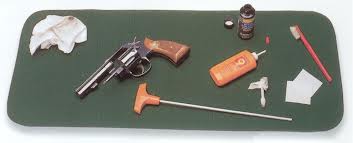
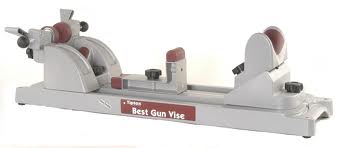
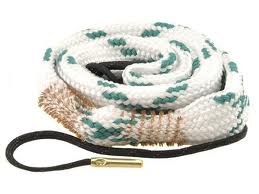
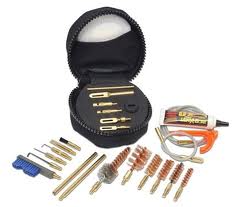
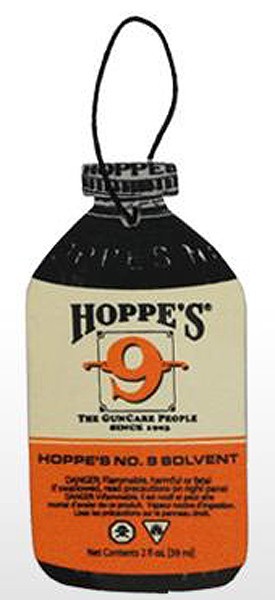
You need to take that new gun apart, clean off any excess preservative and then oil it with high quality gun oil.  If you do not already have gun cleaning supplies, a kit is a good way to start and then you can add specific materials or tools as you need them.  My favorite supplies are Hoppes, although there are others.

Typically a starter kit that will work for multiple calibers including pistols, rifles and shotguns can be purchased for as low as $20. The kit will include solvents to clean and dissolve gun powder deposits, carbon, lead and copper from the barrel bore and mechanism of the gun. A cleaning rod to attach brushes to clean the bore, loops to attach cloth cleaning patches and high quality oil that both lubricates and protects the metal surfaces will also be included. Most kits will also include basic instructions.

Always make sure the gun is unloaded and ensure there is no ammunition in your work area. It is important to read the owner’s manual for proper disassembly and reassembly instructions. Another good source if you are unfamiliar with your new gun is Youtube.com.  A quick search on your specific model will typically reveal videos on disassembly and reassembly. Wipe down the external metal surfaces with gun oil to ensure perspiration and fingerprints do cause corrosion.

Next month we’ll talk about hand loading your own ammunition.

Until then …….Safe Shooting!

TriggerTalk Articles

Article Status

Hello to everyone,

I have completed uploading all the previous Trigger Talk articles  (April 2011 – January 2012). Each month as I write a new column for “The Courant” http://courantonline.com/ I will upload the new column here as well. 

Because I am limited to approximately 450 words for the newspaper articles there may be additional information on the subject to convey but could not include due to space limitations.  If you have questions on a topic and would like to ask me about something, please contact me at Triggertalk.dc@gmail.com . I would be happy assist you if I can!

Matt Clark (Host of the Clarkcast) on WAAM  AM1600 out of Ann Arbor, Michigan has invited me to join  him regularly on the second Sunday of each month for a half hour segment from 2:30 p.m. to 3:00 p.m. During the show we talk about gun related topics and take questions and comments from callers (734-822-1600)  Matt webcasts his show and the the Trigger Talk segments are located at this link http://www.clarkcast.com/about/trigger-talk .

As I mentioned in my bio, I have had people in my life that taught me about guns and shared their passion with me for this subject.  If you don’t already have someone like that, now you have someone to turn to.

Safe Shooting!…

Dick Cupka


Uncategorized

January 2012 Trigger Talk Article: Open Carry

Trigger Talk:  Open Carry

Over the past several weeks we did two sessions of our WAAM Trigger Talk “Radio Edition” on the subject of “Open Carry” inMichigan.

Many people are unaware that it is legal for a law abiding person to carry a gun openly in the state.  While there are restrictions on places you may or may not carry openly, most of those restrictions are exempted if the person also has a Michigan Concealed Pistol License (CPL). This exemption also applies to visiting residents of other states that hold CPL licenses in their home state.

When I first read these rules I was confused as to their application.  I contacted the Michigan State Police Office of the Director of Legal Resource and Education Unit and was able to get direct access to the author of the Michigan State Police Legal Update publication No 86 (dated October 26th 2010). The Sergeant indicated they get many calls on his subject and the goal of their document is to help both Law Enforcement and the public to better understand the rules governing open carry.

The following is a summary of the information in that document:

  • MCL 28.425o lists the premises upon which a CPL holder may not carry a concealed pistol.  MCL 28.425o does not apply to a CPL holder when he or she is carrying a visible non-concealed pistol, commonly referred to as open carry.  
  • MCL 750.234d lists the premises upon which a person shall not possess a firearm; however, CPL holders are specifically exempted by subsection (2)(c).  
  • Therefore, CPL holders may carry a visible non-concealed pistol on the premises listed in MCL 28.425o and MCL 750.234d without being in violation of either statute.

A web search for “Michigan State Police Legal Update 86”, will locate the document and you can download a .pdf file explaining the laws including hot links to the appropriate pages ofMichiganfirearms law and penal code statutes.

Additionally, there are several organizations around the state and nationally such as www.miopencarry.org where additional information may be found as well a tips and pointers on things such as retention holsters and local events promoting open carry.

The decision to carry a firearm whether openly or concealed is not for everyone and must not be taken lightly. You should be well practiced in safe firearm handling and it is your responsibility to understand and abide by the laws in affect.

Next month we’ll talk about gun cleaning and maintenance.

Until then …….Safe Shooting! 

Dick Cupka is an NRA Certified Pistol, Personal Defense in the Home and Concealed Pistol License Instructor. You can reach him by e-mail at….. triggertalk.dc@gmail.com

TriggerTalk Articles

December 2011 Trigger Talk Article: AR style rifles

Trigger Talk:  AR style rifles.

AR style rifles are loved and scorned by many people. The AR10 was designed in 1955 as a replacement for the military’s M1 Garand. 56 years later the AR has become one of the most popular firearms available today.

Much of this popularity is due to the versatility of the platform. Originally the AR15 was only available in 5.56 NATO (.223 Rem). Recoil is minimal, it is extremely accurate and very effective for varmint shooting. Today in larger calibers such as .308 Win. , 6.5 Grendel, and 6.8SPC,AR’s can be used for medium and large game hunting.  A recent trend includes lighter versions designed to fire the .22LR round, allowing low cost practice and plinking.

The level of customization available to the gun owner is amazing with easy to change stocks, upper receivers, barrels, sighting systems, hand guards. An entire parts manufacturing industry has grown supplying the latest “Tactical” equipment.

Detractors of the AR rifles are divided into two groups: Traditional firearm enthusiasts and Anti-Gun groups. A departure from traditional  firearm construction, the AR was built from aluminum and polymers instead of blued steel and walnut and did not look and feel like a traditional sporting rifle. Initially available only in .223 Rem. the AR15 was considered too light of caliber and prohibited from deer hunting in some states.

Anti-gun groups don’t like the way AR’s looked, based on a military design they tried to label it a “Machine Gun” despite firing only one shot for each pull of the trigger. Through-out history civilian firearms have been based on military designs, from the flintlocks, bolt actions based on a 1898 Mauser design, to today’s AR style rifles.  In fact, semi-automatic rifles have been available to the general public since Remington introduced the Model 8 in 1906.

Bill Clinton’s 1994 Assault Weapons Ban, outlawed many guns based on cosmetic features such as pistol grips, folding stocks, detachable magazines and bayonet mounts. These attributes became know as “Evil features” and were banned ostensibly to lower crime.  When was the last time you heard of a crime committed with a bayonet? Today many of us affectionately refer to this style of gun as an EBR (short for Evil Black Rifle).

AR style rifles can be purchased from around $600 up through $2-3000 and are manufactured by many companies including: Colt, DPMS, Rock River Arms, Remington, Ruger, Sig-Sauer, Bushmaster, and Smith and Wesson.

Next month we’ll talk about the pro and cons of “Open Carry”.

Until then …….Safe Shooting!

Dick Cupka is an NRA Certified Pistol, Personal Defense in the Home and Concealed Pistol License Instructor. You can reach him by e-mail at….. triggertalk.dc@gmail.com


TriggerTalk Articles

November 2011 Trigger Talk Article: Selecting a Concealed Carry Handgun Pt. #2

Trigger Talk …Selecting a Concealed Carry Handgun Pt. #2

 Revolvers? Aren’t they obsolete?  Why would I want one of those antiques looking things?

 When it comes to self-defense, the LAST reason for picking a firearm is because it looks cool.  Reliability, power, size, weight, and ability to conceal are what’s important in your carry gun.

 Revolvers are making a comeback in recent years. Innovations in materials and design have produced lightweight carry guns with modern features such as laser sights and polymer shock absorbing frames and grips. Several models are offered with shrouded or internal hammers to prevent snagging on clothing when drawing from a holster.

 Short barreled revolvers take more skill to shoot accurately than a semi-auto pistol. The same features that make for easy concealment also can be a draw back. The short distance between the front and rear sights known as “sight radius” makes sight alignment much more critical. Long trigger pulls can lead to movement of the gun and wide variation in shot placement at 10-15 feet. This may be overcome by the use of laser sight, place the red laser dot on the target and that is where the bullet goes.

 The smallest revolvers often have cylinders that hold only 5 rounds, this is done to make them thinner and easier to conceal. This is a tactical disadvantage when compared to the 8 to 15 rounds found in semi-auto pistols. Carrying extra ammo in a speed loader or speed strip is a must with a revolver.

 The most common caliber for carry revolvers is .38 Special and the slightly more powerful .38 Special +P.  Several manufactures make ammo specially formulated for short barreled guns. The .357 Magnum is an excellent choice and still one of the most powerful handgun rounds available. The recoil however is especially brutal in lightweight guns.  It also has the ability to chamber lower powered .38’s allowing for lower cost and more comfortable practice sessions.

 There are many choices available from the major manufactures: exotic materials, special alloys, stainless steel,. The new Ruger LCR and Smith & Wesson Bodyguard are two of the new polymer guns that are worth looking into. Because revolvers have been made for many decades,  the used market is a great source of affordable guns. Often people have moved to the newer semi-auto guns and barely used revolvers have been traded in.

 Next month we’ll talk about AR style rifles.  Future topics will include Open Carry, personal defense training, reloading ammunition, gun cleaning, gun storage and more! 

 Until then …….Safe Shooting!

 Dick Cupka is an NRA Certified Pistol, Personal Defense in the Home and Concealed Pistol License Instructor. You can reach him by e-mail at….. triggertalk.dc@gmail.com

TriggerTalk Articles

October 2011 Trigger Talk Article: Selecting a Concealed Carry Handgun Pt. #1

Trigger Talk …Selecting a Concealed Carry Handgun Pt. #1

 How do I select a personal defense handgun? What caliber should I get? Do I want to carry in a holster, pocket carry or maybe a purse or fanny pack?.  These are the question we must ask ourselves? The decision to carry and be responsible for your own self defense is more of a lifestyle change than just a gun selection.

 There are many choices and calibers, a minimum for self-defense should be the .38 Special and .380 acp. Years ago these calibers were considered a bare minimum for self-defense. Modern improvements in projectile design and propellant technology have made these rounds very capable self-defense calibers.  This month we’ll talk about semi-automatic pistols and next month we will cover revolvers

 You will find yourself selecting your clothing based on your ability to properly conceal your carry gun.  Your firearm may change based on the seasons of the year.  In the warmer months when wearing shorts and a T-Shirt a small gun such as the Ruger LCP or Smith and Wesson Bodyguard are good choices with a proper pocket holster. These holsters completely cover the trigger guard preventing accidental pulling of the trigger and are specially designed to stay in the pocket when pulling out the gun. In the colder months when wearing a jacket or coat a larger firearm can be carried without it being seen.

 Many instructors will suggest a 9mm midsize or small frame semi-automatic firearm for a first carry gun. 9mm recoil is very manageable for most people and the midsize frames are large enough to get a firm grip. The trigger pull is typically light and short, the weight is minimal and the ability to conceal is great. Examples include the Springfield XD9 compact, Glock 19, Smith and Wesson M&P compact, Ruger LC9, Kimber Solo, Kahr PM9,and the Taurus 709 Slim. Additionally, some of the latest generation of pistols come with a portion of the grip that can be interchanged to fit you hand more comfortably

 9mm handguns are typically too big for pocket carry, so you must consider your method of carry. There are two main types of holsters: Inside the Waistband (IWB) and Belt or Outside the Waistband (OWB).  IWB also may allow you to cover your gun with your shirt as some have a “tuckable” feature for your shirt tail.

 Next month we’ll talk about carrying Revolvers.  Future topics will include AR style Rifles, Open Carry, personal defense training, gun cleaning, gun storage and more! 

 Until then …….Safe Shooting!

 Dick Cupka is an NRA Certified Pistol, Personal Defense in the Home and Concealed Pistol License Instructor. You can reach him by e-mail at….. triggertalk.dc@gmail.com

TriggerTalk Articles

September 2011 Trigger Talk article: Sights and Optics

Trigger Talk ….Sights and Optics

 Most firearms are equipped with basic sights when you buy them. Hunting or Sport Utility Rifles may only be equipped with mounts to allow you to add a sighting system or optics of your choosing.  Simple “Open” or “Iron” sights consist of a single front post and a rear sight with a groove you align with the front site. These sights are fine for target shooting, but the options available today greatly enhance your ability to place your shots where you want.

 Aftermarket sights that have a large single dot front sight with a shallow “V” rear sight and alignment mark such as those sold by XS Sights greatly enhance your target acquisition especially in low light. Sight alignment is further increased in low light by the use of tritium night sights. These sights incorporate a small vial of a glowing material that makes the sights visible even in total darkness. An example of this type of sight is manufactured by Trijicon right here in Wixom MI.

 In recent years the use of lasers on handguns has gained great acceptance and today there are add-on lasers and replacement grips made for virtually all handguns. A laser sight places a small red dot directly on your target that you can see, assuring that the gun is aimed correctly.

 Telescopic sights offer versatility for the shooter, helping to achieve pinpoint accuracy at typical hunting ranges of 100 to 200 yards assuring clean humane harvesting of game.   Scopes allow long range hunting at greater distances with magnum cartridges, and help those of us will older eyes still see the targets.

 A good rule of thumb for purchasing a scope is to spend at least as much on your scope as you did for your rifle. It does not make sense to purchase a high quality rifle and mount a cheap $39 scope on it.  High quality scopes use much better glass with multi-layer coatings that increase light transmission. This allows you to see better in the early morning light or the decreasing light at dusk.

 “Red Dot” sights project a red dot onto a glass pane in the scope itself. When you look through the glass you just place the dot on the target and that is where to bullet goes. These sights are great for quick target alignment and are similar to the types currently in use by our military.

 Next month we’ll talk about “Concealed Carry” handgun selection. Future topics will include personal defense training, gun cleaning, holster selection and more! 

 Until then …….Safe Shooting!

 Dick Cupka is an NRA Certified Pistol, Personal Defense in the Home and Concealed Pistol License Instructor. You can reach him by e-mail at….. triggertalk.dc@gmail.com


TriggerTalk Articles

August 2011 Trigger Talk Article: Selecting defensive handgun ammunition

Trigger Talk …Selecting defensive handgun ammunition.

Aren’t all bullets alike? Can I just buy the cheapest? Are hollow-points illegal?… These are questions I often hear from new shooters, so let’s clear up the confusion.

Inexpensive ammo is fine for practice and breaking in a new gun. Buy as many rounds as you can afford and pull the trigger often. A firearm purchased for self defense should have 400 to 500 rounds fired through it before carrying. This break-in allows the parts to smoothly function together improving reliability. The last 50 – 100 rounds should be with your selected self defense ammo to ensure the rounds feed reliably.

Self defense ammo is expensive, while practice ammo may cost $10-$15 for 50 rounds; it is not unusual to pay $30 – $40 for 20 rounds of premium self defense ammo. Remember, you may have to count on your firearm to save your life; you want the same reliable performance from your ammunition that you expect from your gun.

The goal of self defense ammo is to transfer as much energy as possible to the target while preventing over penetration. Practice/Target or Full Metal Jacket (FMJ) ammunition often retains its shape passing cleanly through the threat and continuing on through walls and distances striking unintended objects or people. You are responsible to ensure the safety of others even in a self defense situation.

A common method to promote bullet expansion is a hollow point. The cavity in the front of the bullet fills with tissue and forces the sides outward like the petals of a flower. This increased diameter helps transfer more energy to the threat, preventing over penetration as well as increasing the chance of damaging vitals organs and the nervous system.

Some makers of defensive ammunition use a plastic plug in the tip to aid expansion by preventing the hollow point from clogging with clothing such as denim or leather. Other special features may include special propellants to reduce recoil and muzzle flash for quicker follow-up shots and to protect your night vision, with some rounds specially designed for short barrel guns such as snub nose revolvers.

The profiles of defensive bullets vary greatly and different guns have varying styles of feed ramps so you may have to try several brands before you find one that your gun “Likes” and will feed reliably.

Next month we’ll talk about Sights and Optics. Future topics will include personal defense training, “Concealed Carry” handgun selection, gun cleaning, storage and more!

Until then …….Safe Shooting!

Dick Cupka is an NRA Certified Pistol, Personal Defense in the Home and Concealed Pistol License Instructor. You can reach him by e-mail at….. triggertalk.dc@gmail.com

TriggerTalk Articles

July 2011 Trigger Talk Article: Shotguns

Trigger Talk ….Shotguns

 Shotguns are at the same time the most versatile and least understood firearms available to the average person.

 A shotgun can be used for several purposes: hunting, sport shooting such as Trap or Sporting Clays, and for personal defense.. Shotguns typically have the added benefit of interchangeable barrels and/or a device on the end of the barrel called a “choke” to tailor the gun to the specific usage desired. Most often the same gun can be used for a variety of uses with only minor modifications.

 A good first shotgun is one that utilizes a “pump” action. After each shot the user pulls back the forestock to eject the spent shell and then pushes forward to load a fresh shell into the chamber. They are simple to use, easy to maintain, and can quickly be adapted to different roles.

 Both Remington and Mossberg manufacture reasonably priced shotguns. Basic models of the Mossberg 500 or Remington 870 can be purchased for under $500 and will typically be equipped with a wood or synthetic stock and a blued steel receiver and barrel. If you desire a pistol grip or camouflage forTurkeyhunting those are commonly available options. Interchangeable chokes are a cylindrical device that screws into the end of the barrel and lets you change the size of the shot pattern for the type of shooting or hunting planned. If you are a deer hunter there are rifled barrels available for single projectiles called a “Slug” instead of “shot” (small pellets for birds or small game). Mounts for telescopic sights are also available for greater accuracy at longer ranges.

 Several manufactures produce a home defense or “Tactical” shotgun which is typically shorter than its hunting counterpart to make it more maneuverable. The barrel is shorter, the stock may be adjustable and include a pistol grip and the magazine tube is longer to hold six or seven rounds instead of the typical four that a hunting gun holds.

 For home protection most instructors consider a good pump action shotgun to be the ideal firearm to deal with a home invasion in the middle of the night. Shotguns are both effective and easy to use, but they require good technique. Many people think you just point a shotgun anywhere in the room and you’ll hit the target. The shot pattern from a self defense shotgun may be larger than a single bullet from a handgun at the ranges typically encountered inside a home (5 to 25 feet), but the pattern of shot would be from 2 to 8 inches in diameter. Though easier to hit a target than with a single 9mm diameter bullet, it still requires aiming.  Home defense shotguns will often include enhanced sights help you quickly acquire your target and assist in low light situations

 Several ammunition manufactures make shotgun shells designed for self-defense. They have special powder to reduce muzzle flash so that your night vision is not affected as much and often have reduced recoil to help make the gun easier to handle effectively. I use 12 gauge 00 Buck Hornady TAP or Winchester PDX shells.

 Next month we’ll talk about selecting personal defense handgun ammunition. Future topics will include personal defense training, “Concealed Carry” handgun selection, gun cleaning, storage and more! 

 Until then …….Safe Shooting!

 Dick Cupka is an NRA Certified Pistol, Personal Defense in the Home and Concealed Pistol License Instructor. You can reach him by e-mail at….. triggertalk.dc@gmail.com

TriggerTalk Articles

June 2011 Trigger Talk Article: Basic Rifles

Trigger Talk ….Basic Rifles

A rifle is a great way to enter the shooting sports. The offerings available to the consumer today in terms of function, style, materials, caliber and price have never been greater.

As we discussed last month we need to look at the intended usage of the firearm.  Some rifles calibers and designs are very versatile and can serve a training role as well as small game hunting, elimination of varmints, and even home defense. We also need to determine who the shooter is going to be. If you are going to be working with youth or small stature shooters then a youth model or one with adjustable stock may be beneficial.

We will start out with a basic model and a .22 Long Rifle (.22LR) caliber is a good choice. These rifles use the same ammunition as the basic handguns we reviewed last month, offering low cost, universal availability, and virtually no recoil.  Basic 22 rifles can he found in several types:

  • Single shot models in which you load each round individually
  • Repeaters with a manually operated action (bolt, lever, or pump)
  • Semi-automatic or self-loading models.

Repeating rifles allow more than one shot to be fired without reloading.  A repeater will have a magazine that contains multiple cartridges or rounds. There are several types of magazines; some are tubular under the barrel or in the butt-stock and others are removable and snap into place underneath the action of the rifle.  A removable magazine allows you to pre-load cartridges into additional magazines for faster reloads. Semi-automatic or self-loading rifles use some of the energy from firing the round to eject the spent cartridge from the rifle, pick up a new round from the magazine and insert it into the chamber. This allows you to continue firing without having to manually work the bolt / lever action or pump the slide to continue firing.  A semi-automatic firearm will fire once for each pull of the trigger, and should not be confused with full automatic or “Machine gun”.

Since the 15th century most firearms were a combination of wood and steel, but  today the use of synthetic materials is common providing low cost of manufacture as well as superior resistance to the elements. Some manufactures are offering basic .22 LR rifles styled after current military rifles.  This offers several benefits that go beyond appearance. These smaller/lighter versions of M4 carbines offer adjustable stocks that allow the same gun to be use by shooters of different sizes. Additionally these guns have same the feel and operating controls of their larger counterparts making the transition to a full power cartridge rifle much simpler.

Rifles offer the option of different types of sighting systems. A good place to start is with the “open” or iron sights found on most basic rifle. Open sights will typically have a blade that sticks up at the “muzzle” or exit end of the barrel that is aligned with a notch in the rear sight when aiming at the target. I like to start with open sights when teaching because it helps student grasp the concept of “sight alignment and trajectory.

For longer distances, greater accuracy, or if you are like me and your vision is not quite as sharp as it used to be, I find a telescopic sight or “Scope” to be useful. A scope allows you to see and place accurate shots for longer range shooting and hunting.  We will talk about different aiming devices and their use as well as larger more powerful rifles in future months.

When purchasing that first training rifle you will be looking for quality and reliability.  Any manufacturer can build the occasional product with a problem but sticking with a major brand and a tried and true model will be a good starting point.  One thing I’ve learned is that there will be many people on the web and in forums more than willing to share views on their favorite guns or the models which they have problems.  Some of the people have valid information while others offer opinions with little or no hands-on experience.

There are some popular models that have been around for decades, and seem to get better and more versatile with age. I will list a few I have experience with but there are many others. Remember a trip to the gun store is in order to make sure your choice fits you well.

 Youth                                                 Lever Action                                    Bolt Action              

Savage Cub                                      Winchester 9422                              Savage 93 and Mark II

Marlin XT Youth                               Henry H001                                      Winchester Wildcat

Remington Model 5                         Marlin 39A                                         Marlin XT


Semi-auto                                         AR (Military Style)

Ruger 10/22                                      Smith and Wesson M&P15-22

Marlin 60                                            Colt M4 Tactical 22 (M2245050)

Savage 64                                           Ruger SR22

Unlike handguns you do not need to obtain “Permit to Purchase” to buy long guns.  When purchasing from a licensed dealer you will need to fill out a form 4473 and a FBI NICS (National Instant Criminal Background Check System) will be performed.

Next month we’ll talk about shotguns. Future topics will include telescopic sights selection, personal defense training, “Concealed Carry” handgun and ammunition selection, gun cleaning, storage and more!  Until then …….Safe Shooting

Dick Cupka is an NRA Certified Pistol, Personal Defense in the Home and Concealed Pistol License Instructor. You can reach him by e-mail at….. triggertalk.dc@gmail.com

TriggerTalk Articles