Show files are up on Podcast Page!
Fun Show, some of the topics we discussed are shown below:

I have mentioned before “Guns only have two enemies: Rust and Politicians”. I am happy to say we have a good start on the Politician part of that statement, now let’s talk about what we can do about rust.
Recently I was helping a friend getting some of his guns ready sale. They had been stored for many years in under varying conditions. Some were in a dry location that was dirty and dusty. Fortunately these guns just required some good old fashioned elbow grease to make them functional and acceptable in appearance.
What broke my heart was that several pistols had been stored where moisture was present. While some of the guns had finishes that resisted the attack: a Glock showed almost no effects, the same was true for a nickel plated Derringer. However a once beautiful Smith and Wesson Model 57 did not fare well at all.
The powerful 41 Magnum revolver with its deep blue polished finish bristled with rust. Dime sized patches of rust were on the barrel, top strap, frame, and cylinder. Hoped it was only surface rust I cleaned the rust off to reveal deep pitting in the finish from corrosion that had gone unchecked for over 20 years. My heart sank almost as fast as the plummeting value of the gun. What could have been a fine collector’s gun had lost about 80% of its value.
I chemically and abrasively removed the rust and applied a new finish solution that I often use for touch up on a gun, but there is no way to replace the lost material on the show surfaces of the gun.
Taking the gun apart I found the internal workings of the gun had only a small amount of surface rust. I was able to easily clean the firing control mechanism restoring smooth safe function.
Most important in this story is that it could have been prevented. Two factors were at play on this unlucky revolver: First the storage location was in area subject to humidity and temperature variation and Second the location of the rust patches appeared to be in areas the revolver was handled and put away with fingerprints left on the gun.
What can we do to prevent corrosion of this type? Guns may be stored in many ways: Some are in safes or cabinets, others are stored in cases, closets or open storage areas. Safes and cabinets need a dehumidifier, there are several types from very simple canisters of silica gel desiccant recharged in your oven to remove absorbed moisture to a Remington desiccant unit that is dried by plugging it into a wall socket. If you have an electrical outlet in your safe you can use a heated rod to keep your safe warm and dry with an electrically heated warming rod in the safe.
Clean your guns each year even if you haven’t shot them, giving you an opportunity to catch rust in the early stages. Wipe your guns down with light oil before you put them away. If you handle them in between cleanings wipe off any fingerprints to prevent the acids and moisture on your skin from causing rust to begin.
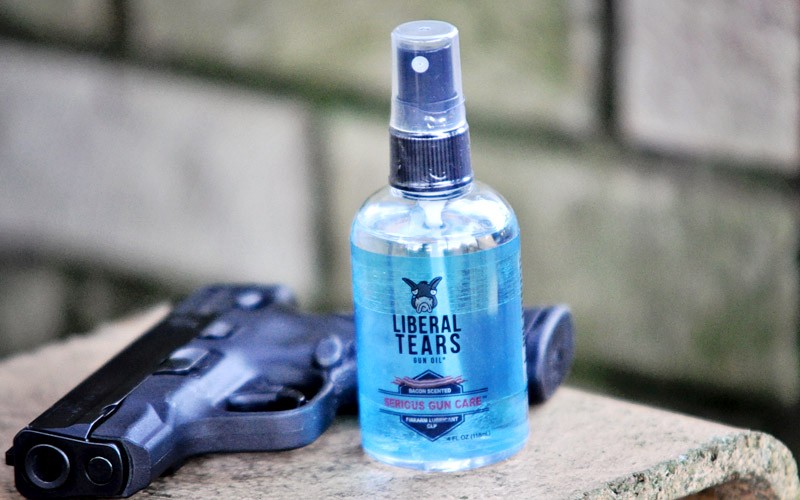
I use Remington Rem-Oil wipes that are available in disposable packs and a simple dispenser or a reusable oil impregnated cloth.
Show files are up on the Podcast Page!
Great start to the New Year, we had several callers today and we talked about all sorts of things: Rust prevention on stored guns, a new gun purchase of a Springfield EMP in 9mm by “John from Danville” and listener “Mike from Macomb County” warned about the use of ultrasonic cleaners on certain materials and the importance of using the correct solution for the material you are cleaning.
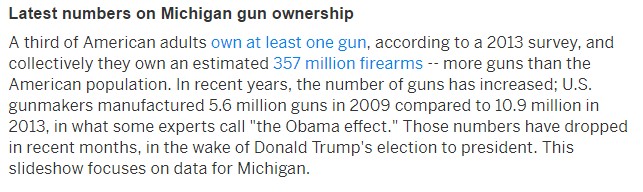
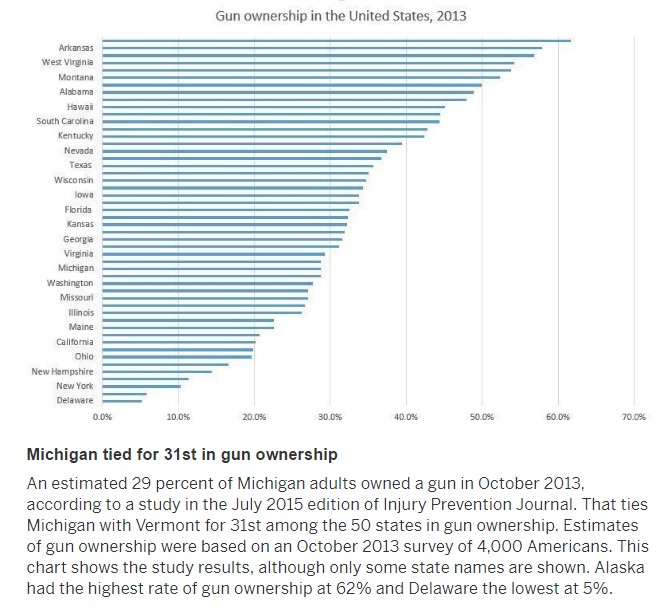
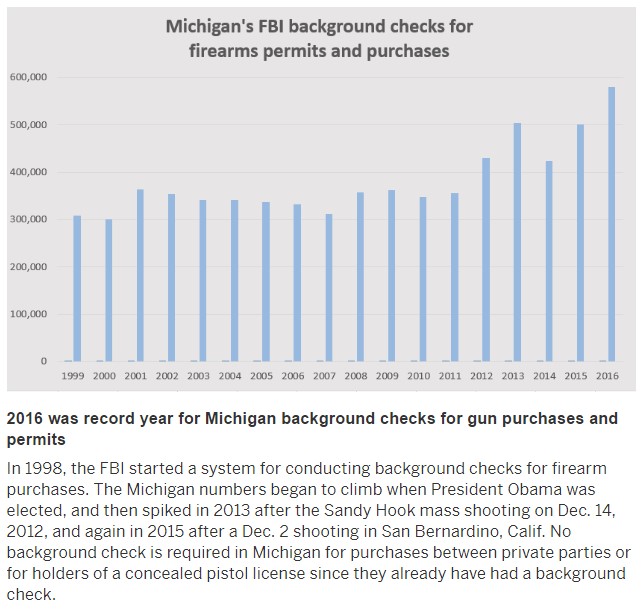
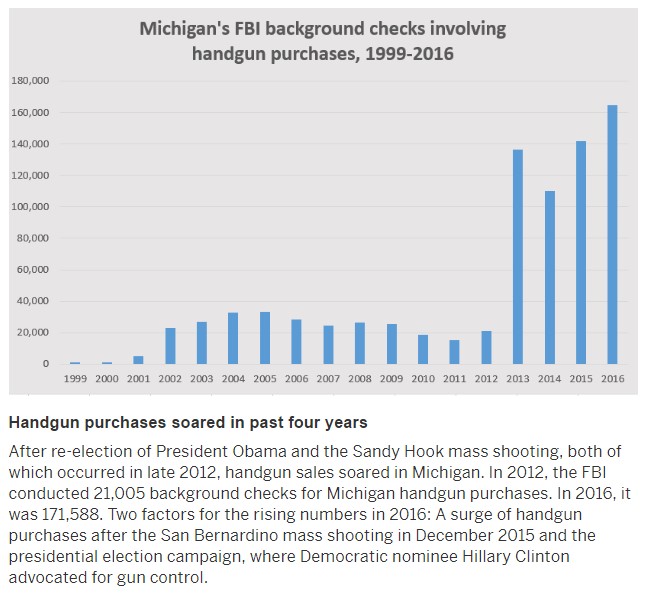
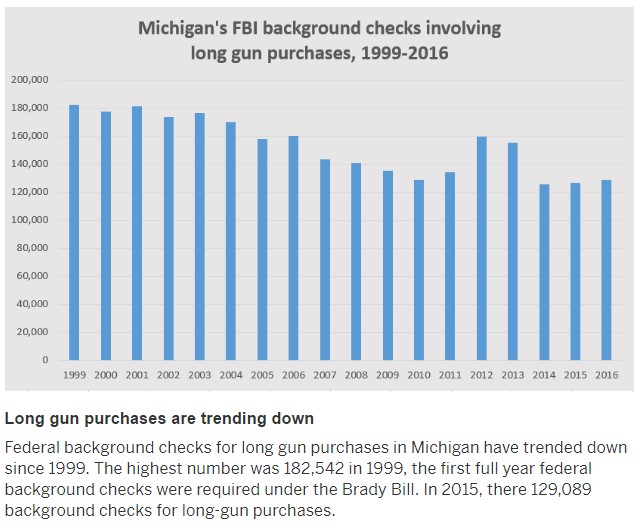
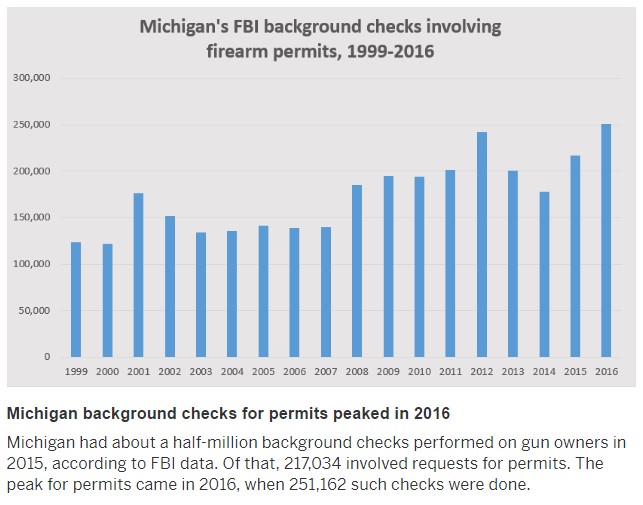
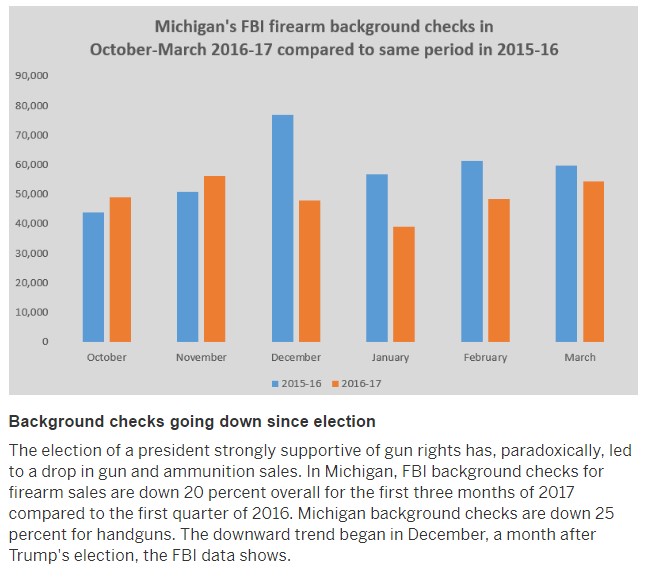
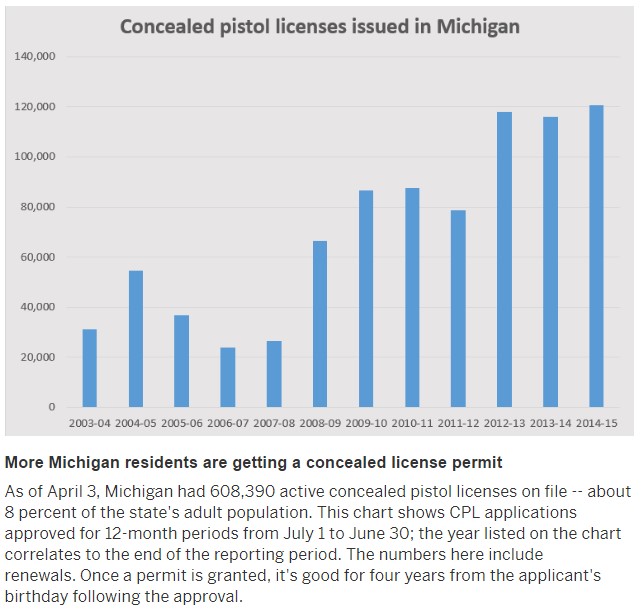
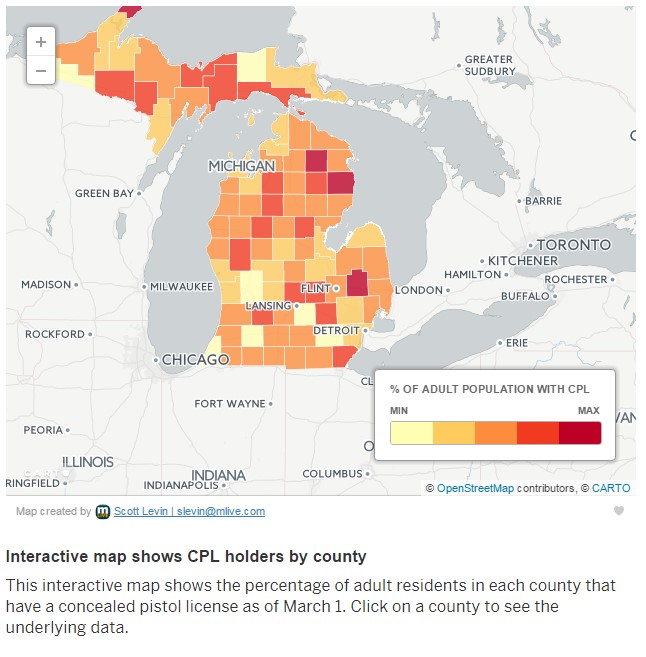
We talked about the current number of CPL holders in Michigan and the gain of over 97,000 new CPL holders in 2016.
Michigan State Police CPL monthly report by county
Can algorithms help to stop gang violence on social media before it spills into the streets?
“Cyber banging” has been making headlines for years, but researchers developing a tool at Columbia University hope computer analysis of language in social media posts can help people on the ground stop gang violence before it happens.
As social media continues to permeate American culture, more and more violence plays out on platforms like Facebook, Twitter and Snapchat. An incident in Chicago this week where four black suspects tied up, taunted and tortured a disabled white man while making racist comments was streamed on Facebook Live, and drew the ire of people nationwide. Last month, a man and a woman were arrested in Milwaukee after they allegedly beat a man to death, posting video of the beating to Snapchat.
These incidents are sometimes seen by millions of people, as they grab national headlines, but in some communities in cities like Chicago, the relationship between violence and social media is less visible and more complex. In March, a man named Brian Fields was shot several times on the city’s South Side while streaming on Facebook Live.
“More and more of these incidents either originate or escalate from some type of activity that is on a social media platform,” said Chicago police spokesman Anthony Guglielmi at the time, noting that it’s standard for Chicago police to search social media after a shooting, looking for clues from instances of the so-called cyber banging, where gang members taunt one another on social media.
And while police are looking at these online platforms after acts of violence, Desmond Patton, a professor at Columbia University in New York, is part of a team that’s looking at language in social media posts and hoping to detect the violence before it starts.
“What we have is a computational system, or an algorithm, that can detect and predict aggression and loss,” said Patton, noting he and his team are focusing their research on a small Twitter-based data set in Chicago.
The researchers hope the tool will be useful in gang-plagued communities like Chicago’s South Side. For Patton, a social media post isn’t always the end result, like the Facebook Live torture video in Chicago this week. Oftentimes, it can be the inciting incident, with gang members taunting one another in videos or tweets.
“At times, that can be in the form of an aggressive or threatening comment, or an emoji or hash tag that indicates gang activity or violent behavior,” said Patton in an interview with Guns.com.
Patton says while social media sometimes helps escalate certain situations, people shouldn’t blame the social media platforms for the violence.
“I think the tools are being used by a user and so the tools are going to capture what’s happening in the environment,” he said. “So is it the tool’s fault that the individual was shot, or is there a problem with violence in our country?”
As for the algorithm, Patton is optimistic that he and his team are headed in the right direction.
Podcast files from the December 31st Show are up on the Podcast Page!
Thank You for a great 2016! I have heard from so many of you both on the air and through e-mail, I really enjoy the suggestions, hearing about topics you enjoyed and your constructive criticism on how to improve the show.
See you in on the airwaves in 2017!
Dick

Hi Guys,
I think I finally have the problems with the Podcasts resolved. I have re-uploaded all the files for the December 3rd, December 10th, and December 17th Shows.